
Automated Data Processing: Eliminate Manual Tasks and Drive Business Growth
In 2026, automated data processing (ADP) stands at the forefront of digital transformation agendas across Europe, proving indispensable for businesses aiming to streamline operations, reduce...
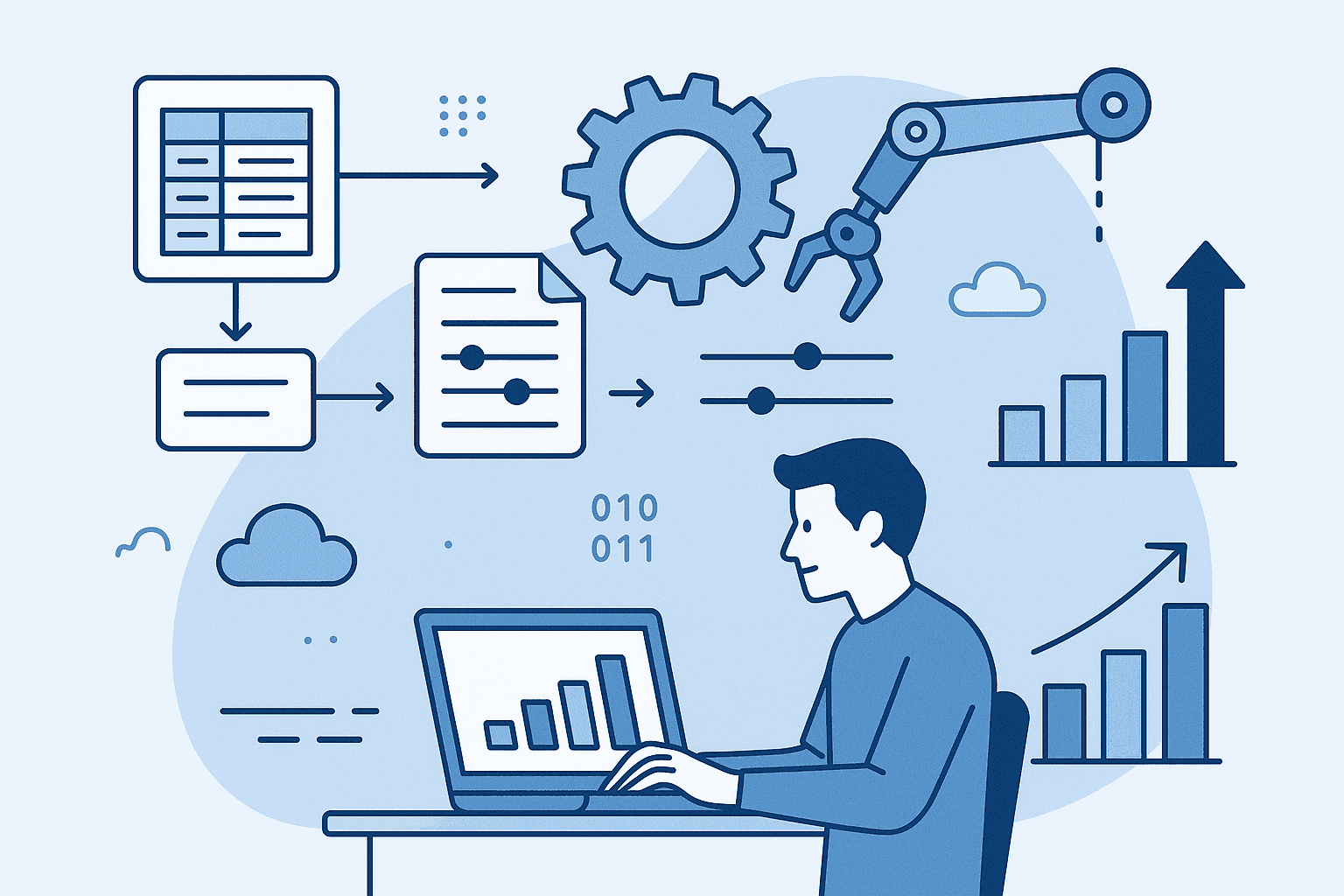
Overview of Automated Data Processing
In 2026, automated data processing (ADP) stands at the forefront of digital transformation agendas across Europe, proving indispensable for businesses aiming to streamline operations, reduce manual errors, and accelerate decision-making. At its essence, ADP replaces traditional manual handling of data with intelligent systems that ingest, process, and output data with minimal human intervention, enabling faster and more accurate business insights.
European enterprises, ranging from SMEs to large corporations, are now leveraging ADP solutions not just as operational tools but as strategic assets. The accelerating adoption is partly driven by the EU’s evolving regulatory landscape aimed at simplifying data governance and encouraging responsible AI utilization—frameworks that foster trust and innovation simultaneously. For example, the European Commission’s recent proposal to ease the complexity around digital regulations is creating a more enabling environment for deploying automated solutions in compliance with GDPR and emerging AI governance rules.
ADP utilizes a variety of technologies, including robotic process automation (RPA), artificial intelligence, machine learning, and advanced analytics to handle complex workflows involving huge volumes of structured and unstructured data. These systems are increasingly sophisticated, capable of adaptive learning that improves accuracy and efficiency over time. For instance, AI models embedded in data processing pipelines can detect anomalies, cleanse datasets, and even predict trends, executing tasks that previously required specialized human expertise.
In practical business contexts across Europe, automated data processing is revolutionizing industries such as finance, healthcare, manufacturing, and logistics. Financial firms automate compliance checks and risk assessments in near real-time, while healthcare providers streamline patient data management and diagnostics. Manufacturing plants employ automation for quality control and inventory management, reducing downtime and waste. These advances contribute not only to operational excellence but also to enhanced customer experiences by accelerating services and personalization.
Yet, the journey to ADP maturity is not without challenges. Based on recent studies, many European enterprises are caught in a “mid-stage” automation gap—having deployed automation in isolated pockets without full integration or scalability, limiting their ability to harness end-to-end value from their data assets. Bridging this gap requires modern web solutions that integrate disparate systems, enabling data fluidity and automated orchestration across departments and processes.
Looking ahead, the synergy between smart automation technologies and data processing will deepen, fueled by innovations such as the EU Data Act mandating accessible machine-readable data pathways and heightened emphasis on data ethics and privacy. For leaders in IT, marketing, and business management, understanding and investing in these evolving capabilities will be key to staying competitive in the European market. Automated data processing is no longer just a back-office utility; it is a critical growth driver that helps businesses thrive in a data-driven economy.
References:
- The Data Advisor, “2026 Year in Preview: European Digital Regulatory Developments for Companies to Watch Out For,” January 2026
- Fivetran, “What is automated data processing, and why does it matter?” January 2026
- Ken Research, “Global Automated Data Processing Market Outlook to 2030,” June 2025
- Solvexia, “The Ultimate Guide to Data Process Automation in 2026,” January 2026
Benefits of Eliminating Manual Data Tasks
In the dynamic landscape of European businesses in 2026, the shift from manual to automated data processing is not just a trend but a necessity. Eliminating manual data tasks brings profound benefits that directly fuel business growth and operational efficiency, enabling companies to stay competitive in a fast-evolving market.
One of the most significant advantages is enhanced accuracy and reliability. Manual data entry and processing are notoriously error-prone due to human fatigue, oversight, or inconsistent input. Automated systems leverage advanced AI workflows that achieve accuracy rates nearing 99%, compared to 85-95% typical with humans. This precision reduces costly rework, compliance risks, and misinformed decisions (Lleverage.ai, 2025). For European companies, particularly those handling sensitive data under strict GDPR regulations, reducing errors means better compliance and minimized penalties.
Speed is another game-changer. Automated data processing accelerates workflows dramatically, transforming tasks that previously took hours into near-instantaneous actions. This is crucial for sectors like finance, logistics, and retail, where real-time data insights drive operational agility and customer satisfaction. Companies now no longer debate the usefulness of AI workflows but focus on how swiftly they can implement them to gain competitive advantages (ConceptRecall, 2025).
Cost efficiency is a direct and measurable benefit. Automating repetitive data tasks cuts down labor costs significantly by freeing up employees from low-value work. This redeployment allows teams to focus on strategic, innovative tasks, boosting overall productivity and job satisfaction. Additionally, it reduces the hidden costs of manual processing such as delays, errors, and operational bottlenecks (Medium.com, 2025). European manufacturers and service providers increasingly rely on smart automation to maintain lean operations and adjust swiftly to market changes.
The scalability brought by automation cannot be overstated. As data volumes continue to grow exponentially, manual processes become bottlenecks that stifle business scalability. Automated systems handle increasing workloads seamlessly without the need for proportional increases in staff or infrastructure, supporting sustainable expansion even under fluctuating demand.
Automated processing also enhances data governance and security. With unified platforms and native governance emerging as the new norms in data management, automation minimizes human interference and thus reduces risk of breaches or mishandling. It supports better data lineage tracking, auditability, and compliance reporting—critical factors for meeting European regulatory standards (CIO, 2026).
In summary, eliminating manual data tasks equips European businesses with faster, more accurate, and cost-effective data management. The outcome is a transformative boost to business intelligence, operational resilience, regulatory compliance, and ultimately growth. Failure to embrace these benefits risks falling behind in a future where data-driven automation not only supports efficiency but defines market leadership.
Key Technologies Driving Automation in Data Processing
In 2026, European businesses aiming to eliminate manual data tasks and boost operational efficiency are turning to a sophisticated suite of technologies that power automated data processing. These innovations stand at the forefront of digital transformation, enabling companies to extract value from data faster, more securely, and with minimal human intervention.
Artificial intelligence (AI) remains the central pillar in driving automation today. Its ability to learn from complex data patterns and make decisions autonomously transforms the raw data pipeline into a smart, adaptive system. In Europe, the ongoing enforcement of robust data privacy laws like GDPR and the new EU AI Act require AI tools to incorporate privacy-by-design principles and explainability. This regulatory backdrop encourages adoption of advanced AI that not only automates processing but also ensures compliance and ethical data handling. Machine learning models that classify sensitive information, detect anomalies, and suggest corrective actions automatically are now widely integrated within data workflows, eliminating manual oversight on repetitive compliance tasks.
Another critical technology shaping automated data processing is robotic process automation (RPA). RPA bots are programmed to perform structured, rule-based tasks such as data extraction, transformation, and loading (ETL). What sets 2026 apart is the fusion of RPA with AI—known as intelligent automation or hyperautomation—which enables bots to handle semi-structured or unstructured data through natural language processing and image recognition. This hybrid approach broadens the scope of tasks that can be reliably automated, from invoice processing in finance departments to customer data updates in CRM systems.
Cloud-native platforms and automation frameworks designed for data processing have also become indispensable. These platforms leverage scalable infrastructure to ingest, clean, and analyze large volumes of data in real time, delivering speed and flexibility that traditional on-premises systems can’t match. Moreover, adopting containerization and Kubernetes orchestration allows seamless integration of automated data pipelines with broader enterprise architectures. This modular approach is instrumental in Europe's diverse IT environments, supporting businesses of all scales from startups in Berlin to multinational enterprises headquartered in Amsterdam.
Data governance and metadata management solutions are evolving to embed automation directly into control frameworks. Instead of static policies, modern governance applies AI to continuously monitor data lineage, usage patterns, and access controls. This shift ensures automated workflows operate within defined compliance boundaries, which is vital in sectors like financial services and healthcare with stringent regulatory oversight across Europe.
A concrete example is the integration of tools like Azure AI infrastructure combined with Azure Databricks, which enables European firms to connect thousands of GPUs to accelerate AI-driven data processing tasks. This kind of high-performance computing facilitates rapid training and deployment of sophisticated machine learning models to automate everything from fraud detection to predictive customer analytics.
In summary, the key technologies steering automated data processing in Europe converge around advanced AI, intelligent automation combining RPA and machine learning, cloud-native scalable platforms, and embedded governance frameworks. Together, they empower European businesses to shift from manual data toil to efficient, compliant, and insightful data-driven operations—fueling sustainable growth in an increasingly digital landscape.
Sources include recent reports and industry insights from Monte Carlo, IBM, Solvexia, and data center knowledge providers highlighting emerging trends in AI-driven data management and automation frameworks in 2026.
Case Studies: Successful Implementation of Automated Data Systems
Europe’s embrace of automated data processing is no longer a futuristic concept but a present-day reality driving tangible business outcomes. Leading companies across industries have leveraged smart automation to streamline data workflows, cut down costs, and scale operations efficiently. Here are some compelling case studies from 2025 that demonstrate real-world success in automated data processing within the European context.
Manufacturing: 40% Cost Reduction through RPA
A prominent manufacturing firm in Germany implemented Robotic Process Automation (RPA) to automate repetitive data entry, quality control data compilation, and regulatory reporting. Before automation, these manual data tasks caused frequent errors and process delays. Post-implementation, the company reported a 40% reduction in total operating costs by eliminating errors and accelerating data throughput. This automation also ensured compliance with stringent European manufacturing standards without additional headcount (HBLAB GROUP, 2025).
Retail Banking: Digital Service Transformation and Compliance
A key retail bank in the UK faced challenges with legacy data systems that slowed down compliance with PSD2 regulations and limited scalability. By deploying an AI-powered automated data processing platform, the bank integrated various customer and transaction data streams seamlessly. This allowed quicker generation of compliance reports, enhanced fraud detection through anomaly identification, and unlocked new revenue streams via personalized digital services. The system’s scalability supported rapid customer growth without operational bottlenecks (Accelirate, 2025).
Automotive Industry: AI-Driven Predictive Maintenance
BMW spearheaded early adoption of AI-driven automated data systems to enhance their manufacturing and maintenance schedules. By integrating sensor data from production lines with automated processing, BMW identified potential equipment failures well before downtime occurred. This predictive maintenance reduced unexpected stoppages significantly, improved product quality, and optimized maintenance costs. It also aligned with tight European automotive quality and safety regulations, proving automation can meet rigorous industry standards (FutureCode IT Consulting, 2025).
Financial Services: Automation in Fraud Detection
The financial sector in Europe has benefited immensely from automated data processing combined with AI in fraud detection. Juniper Research highlights that the adoption of AI for automated compliance and fraud prevention is projected to save the financial services industry over $10 billion by 2025. Financial institutions use automated workflows to clean and analyze vast transaction datasets in real time, flagging suspicious activities far more accurately and swiftly than manual methods (SuperAGI, 2025).
Trade Finance: Streamlining Letter of Credit Closure
A European bank used the Nividous automation platform to automate daily closure processes for letters of credit, a traditionally labor-intensive task. The platform automatically logs into core banking systems to identify expiring records, perform necessary checks, and update statuses without human intervention. This automation led to increased operational efficiency, reduced manual errors, and enhanced customer satisfaction through faster processing times (Nividous, 2025).
These case studies exemplify how Europe’s leading enterprises are translating automation investments into measurable improvements in cost efficiency, compliance, operational speed, and customer experience. Businesses contemplating automated data system implementation must consider not just the technology but also the regulatory landscape unique to Europe. With automation technologies maturing, organizations that adopt smart data workflows position themselves for sustained growth and competitive advantage in an increasingly data-driven economy. AccelyBiz stands ready to support European businesses in navigating this transformative journey.
Challenges in Adopting Automated Data Processing Solutions
The journey towards fully automated data processing can be transformative for European businesses, saving time, increasing accuracy, and driving growth. However, adoption is far from straightforward and comes with a unique set of challenges that CEOs, IT managers, and marketing leaders must navigate strategically in 2026.
One of the foremost barriers is the complexity of integrating automation within legacy systems and existing workflows. Many European enterprises operate with a patchwork of aging software and databases, making seamless automation difficult without costly and time-consuming overhauls. For example, outdated data silos can significantly limit the flow of information needed for automation algorithms to operate effectively, causing delays and inconsistencies.
On top of integration hurdles, skills shortages in IT talent with expertise in both automation technologies and data engineering are acute. Recent surveys predict that by 2026, 90% of organizations in Europe will face critical shortages in IT specialists needed to implement and maintain automated data processing systems[^1]. This talent gap impacts not only the initial deployment but ongoing optimization and troubleshooting, slowing organizational agility.
Regulatory compliance remains a pivotal and evolving challenge. The European Union's digital regulations, such as the AI Act and Data Act, impose strict requirements for data privacy, security, and operational transparency[^2]. Automated data processing solutions must be carefully designed to comply with these frameworks, adding layers of complexity and risk to implementation. Compliance is especially challenging for multinational companies operating with cross-border data flows subject to differing national interpretations of EU law.
Another difficulty stems from the initial capital investment required for hardware, software licenses, and expertise needed to deploy automation at scale. While automated systems promise long-term cost savings, securing upfront budget approval in conservative sectors or during economic uncertainty remains a major obstacle.
Change management and organizational culture also play a crucial role. Resistance from employees wary of job losses or the shift in workflows can stifle adoption. Without clear communication and training from leadership, businesses risk underutilization of automated tools, limiting ROI and undermining growth potential.
Lastly, while automation promises efficiency, the quality, provenance, and governance of data input are critical to success. Poor data quality can mislead automated processes, leading to inaccurate outcomes or system failures. Establishing robust governance practices around real-time data ingestion and transformation requires focus and cross-departmental coordination.
In sum, while automated data processing is a powerful catalyst for business growth in Europe, companies must thoughtfully address integration complexity, talent shortages, regulatory compliance, budget constraints, cultural adaptation, and data governance challenges. Leaders who invest strategically in overcoming these barriers position their organizations to harness automation’s full benefits in the evolving digital landscape.
[^1]: ERP Software Blog, "Data Integration in 2026: AI Agents, Market Growth, and What IT Leaders Need to Know," Dec 2025
[^2]: The Data Advisor, "2026 Year in Preview: European Digital Regulatory Developments," Jan 2026
Impact of Automation on Business Growth and Efficiency
In 2026, the integration of automated data processing is not merely a technical convenience but a strategic lever accelerating business growth and operational efficiency across Europe. As companies grapple with increasing data volumes and complexity, automation emerges as the essential catalyst that frees organizations from the bottlenecks of manual tasks while driving competitive advantage.
Recent research reveals that while 78% of European enterprises remain in mid-stage automation, focused investments in orchestrated automation can cut cross-system frictions and reduce costs by 50-70% across business processes (Lleverage, 2026). This means that when automation extends beyond isolated functions into end-to-end workflows, companies realize transformative efficiency gains and cost savings. For example, in smart manufacturing hubs such as Germany and the Netherlands, automation stabilizes production output and scales operations without corresponding increases in labor costs or downtime (European Business Review, 2025).
More importantly, automation in data processing directly impacts business growth by enabling agility and faster decision making. Automated data pipelines—powered increasingly by AI-driven tools—allow real-time insights that executives use to pivot strategy swiftly, optimize marketing campaigns, and enhance customer experience (MSR Cosmos, 2025). The transition from manual input and legacy siloed systems to streamlined automated workflows enhances visibility and operational intelligence across departments, from finance to supply chain management, reducing delays and human errors tremendously (NPOSEuro, 2026).
From a European regulatory standpoint, automation also helps businesses maintain compliance with stringent data protection standards like GDPR by embedding privacy-by-design principles and audit trails within automated processes. This reduces legal risks while building consumer trust, a vital factor in sustaining growth in digital economies (NPOSEuro, 2026).
A practical example from the retail sector in France demonstrates that automation of inventory data handling and order processing led to a 30% increase in order fulfillment speed, directly impacting revenue growth and customer retention. Additionally, automation allows workforce redeployment from repetitive tasks to strategic initiatives, such as innovation and business development, thus multiplying value creation beyond efficiency gains (Stamps.com, 2025).
Looking ahead, the evolving automation landscape emphasizes intelligent automation, combining robotics, AI, and hyperautomation. Businesses leveraging this are expected to experience even greater productivity growth—McKinsey reports firms using AI copilots alongside automation achieve 1.6x higher productivity and better employee engagement compared to those relying on automation alone (The IT Source, 2026). This synergy between humans and machines fosters resilience and scalable growth, critical for the dynamic European market environment.
In essence, automation is reshaping the business growth paradigm in Europe by eliminating operational drag, accelerating insights-driven decision-making, and enhancing scalability while safeguarding compliance. Companies that harness this power strategically will not only optimize costs but also unlock new opportunities for innovation and revenue expansion—making automated data processing a cornerstone of modern digital transformation strategies.
Comparative Analysis: Manual vs. Automated Data Processing
In today’s fast-paced, data-driven European business landscape, choosing between manual and automated data processing is no longer just a technological decision—it’s a strategic imperative. Both methods offer distinct advantages and limitations, but the scale, speed, and complexity of modern business data increasingly push organizations toward automation to maintain competitive agility and operational efficiency.
Speed and Efficiency
Manual data processing relies heavily on human input and interpretation, which inherently limits speed and scalability. Common manual tasks such as data entry, validation, and report compilation can become bottlenecks, especially when handling large volumes or complex datasets. For example, a Mammoth Analytics 2026 report highlights that manual workflows can add days or even weeks in delay for data availability, directly impacting decision-making speed and agility.
Automated data processing transforms these time-consuming tasks into streamlined, continuous pipelines using software bots, AI, and machine learning. As recurrent processes—nightly aggregations or real-time data updates—are programmed to run without human intervention, businesses gain near-instant access to quality-assured data. This leads to significant reductions in processing time, enabling faster insights and quicker responses to market changes.
Accuracy and Consistency
Manual handling of data, especially repetitive tasks, is prone to human error—miskeying, inconsistent formatting, or overlooked anomalies—all of which degrade data quality and reliability. Such errors ripple through analyses and reports, impairing the trustworthiness of insights drawn.
Automation, however, offers consistency by applying predefined validation rules and error-checking algorithms uniformly. Tools like robotic process automation (RPA) and AI-driven cleansing ensure high data integrity before insights generation. The 2026 industry consensus underscores automation’s ability to minimize errors drastically, improving overall data quality and enabling more confident business decisions.
Cost Considerations and ROI
At first glance, manual data processing might seem cheaper due to the absence of upfront technology investments. Yet, hidden costs abound through inefficiencies, rework, and slower reaction times. A recent study by Derrick App in late 2025 documented that while initial automation setup incurs expenses, the long-term ROI is significantly higher than manual methods. Automation enables labour redeployment from mundane tasks to strategic roles, leading to better workforce utilization and increased innovation.
Especially in Europe’s competitive markets, automating data handling can halve operational costs related to manual processing overheads and errors. Moreover, faster data turnaround supports revenue growth by accelerating go-to-market strategies and customer responsiveness.
Flexibility and Complexity Handling
Manual processing retains an edge where data scenarios require nuanced human judgment, such as qualitative survey responses or observational studies. The ability to adapt instantly to unique cases without rewiring software can be important, particularly in research-driven or highly variable industries.
Conversely, automation excels with structured, repetitive datasets and volumes beyond human feasibility. Modern platforms integrate AI models that continually learn from new data patterns, enabling automated anomaly detection and dynamic adjustment, capabilities unattainable in manual workflows.
Impact on Business Growth and Future Readiness
Automated data processing is clearly aligned with European enterprises aiming for digital maturity. It supports scalability, fosters data democratization across departments, and drives continuous improvement cycles. As noted in a 2026 analysis from Solvexia, these improvements translate into measurable business growth, through enhanced efficiency and decision-making precision.
Manual methods, while still relevant for specific contexts, increasingly act as limiting factors in reaching modern data excellence. Businesses embracing automation are better positioned to exploit emerging trends such as AI-powered analytics, real-time personalization, and automated compliance reporting.
In summary, while manual data processing offers flexibility and low upfront costs, it cannot match the efficiency, accuracy, and strategic potential of automated systems in the context of today’s European business environment. Automating data workflows is no longer a luxury but a necessity to stay competitive, reduce costs, and fuel sustained growth in 2026 and beyond.
Future Trends in Automated Data Processing
As Europe’s business landscape continues to evolve fast into 2026, automated data processing is set to become even more foundational in driving smart automation and modern digital solutions. Companies across sectors are embracing advanced automation technologies not just to cut mundane manual tasks but to unlock strategic insights and agility that fuel growth. The future of automated data processing in Europe will focus heavily on integration with cutting-edge AI capabilities, enhanced real-time data processing, and a stronger emphasis on privacy and regulatory compliance.
One of the most transformative trends is the rise of AI-powered autonomous agents dedicated to handling complex, context-aware data tasks. Gartner predicts that by the end of 2026, around 40% of enterprise applications will incorporate these task-specific AI agents — a sharp jump from less than 5% in 2025. These AI agents can navigate vast and varied datasets autonomously, cleaning, consolidating, and enriching data in milliseconds to make it instantly actionable. For European businesses, this shift means faster decision-making cycles with reduced error rates and substantially cut migration and integration timelines for legacy systems. Enterprises leveraging these AI agents gain a competitive edge by responding swiftly to market shifts and customer demands without burdening human analysts with repetitive data wrangling.
Real-time data processing is another major focus for 2026. With increasing digital transformation, businesses demand instantaneous insights that allow them to adapt operations dynamically. Technologies like event-driven architectures (e.g., Apache Kafka) are becoming standards for handling streaming data, enabling continuous data feeds from IoT devices, customer interactions, and supply chain events. For European industries such as manufacturing, retail, and financial services, having real-time data at their fingertips allows automation systems to optimize processes on the fly — reducing downtime, improving quality, and fine-tuning marketing efforts with precise customer targeting.
Another rising imperative is automation built with privacy and compliance in mind. Privacy-enhancing technologies (PETs) gain momentum, especially in the context of stringent EU regulations like GDPR and the AI Act. Businesses will increasingly adopt “privacy-by-design” automation platforms that ensure personal and sensitive data are processed securely, supporting controlled data sharing while maintaining transparency and auditability. This careful balance boosts customer trust and simplifies compliance workloads, critical for companies operating across multiple European jurisdictions.
Augmented analytics will also reshape automated data workflows, combining AI, machine learning, and natural language processing. Modern solutions enable users to interact with data through intuitive conversational interfaces, facilitating data querying, visualization, and insights generation even for non-technical managers. This democratization of data access empowers diverse teams to make data-driven decisions faster, bypassing historical bottlenecks of relying solely on data science teams.
Finally, the convergence of automated data processing with cloud-native and edge computing will define next-gen architecture. European companies will deploy hybrid data infrastructures, processing vast data volumes both centrally and at edge locations near data sources. This maximizes responsiveness, reduces latency, and supports emerging use cases such as real-time quality control in smart factories or instant fraud detection in banking transactions.
In summary, the future of automated data processing in Europe hinges on intelligent AI agents, real-time and event-driven data handling, privacy-centric automation, augmented analytics capabilities, and distributed cloud-edge architectures. For CEOs and IT managers, integrating these trends offers a powerful recipe to streamline operations, accelerate innovation, and drive sustainable business growth in an increasingly complex digital ecosystem. Embracing these advancements ensures European enterprises remain agile, compliant, and competitive in the data-driven economy of tomorrow.
Sources:
- Monte Carlo Data Management Trends, Dec 2025
- Gartner Enterprise AI Predictions 2026
- Rapidionline Data Integration Trends, Dec 2025
- ERP Software Blog on AI Agents in Business Applications, Dec 2025
- The IT Source on Privacy-Enhancing Technologies, Dec 2025
Best Practices for Implementing Automated Solutions
Implementing automated data processing solutions is a strategic imperative for European businesses aiming to boost efficiency and accelerate growth in 2026. However, the successful rollout of these technologies requires thoughtful planning and execution tailored to the modern European regulatory and business landscape. Here are the most effective best practices rooted in current trends and regulatory realities.
Firstly, selecting the right automation tools is crucial. Leading solutions in 2026 emphasize low-code and no-code platforms that lower barriers for IT and business teams to collaborate. These platforms enable faster deployment while reducing reliance on scarce, specialized IT resources. For instance, tools that integrate AI-driven orchestration capabilities can seamlessly connect disparate systems like SAP, Exact, and Business Central, as seen in emerging enterprise platforms across Europe. This integration eliminates silos and creates intelligent, end-to-end workflows that enhance operational cohesion and agility.
Secondly, European businesses must embed data compliance and privacy by design within their automation strategies. The evolving EU regulatory framework, including updates in GDPR, the EU Data Act, and forthcoming Digital Services Act provisions, demands rigorous control of data flows, transparency, and robust governance within automated processes. Enterprises should map data flows accurately, implement formal complaint handling for automated decision-making, and maintain detailed documentation as part of compliance and risk management. This safeguard not only ensures legal conformity but also builds consumer trust—key to sustaining business in Europe’s privacy-conscious markets.
Thirdly, continuous employee training and change management are vital to realize automation benefits fully. Automated solutions often disrupt existing workflows; preparing teams with comprehensive training and clear communication reduces friction and resistance. It also promotes a culture of innovation where human talent can focus on more strategic and creative tasks rather than repetitive manual ones. European companies leading in automation invest in upskilling programs that bridge digital literacy gaps and align workforce capabilities with new technology demands.
Furthermore, enterprises should prioritize scalability and future-proofing in their automation architecture. Designing systems with distributed computing and cloud-native principles ensures that solutions can adapt as data volumes grow and processing complexity increases. This foresight protects technology investments and supports rapid innovation cycles, a necessity in Europe’s fast-evolving digital economy.
Lastly, monitoring and measuring automation outcomes rigorously is key. Defining clear metrics for productivity, error reduction, cost savings, and customer satisfaction helps organizations quantify the return on investment and continuously refine automated workflows. Some companies are now leveraging AI-enabled analytics to dynamically detect processing anomalies and optimize the automation pipeline in real time—a leap in operational intelligence that sets European frontrunners apart.
In summary, the path to successful automated data processing in Europe blends advanced, integrated technologies with strict regulatory adherence, proactive workforce enablement, and strategic architecture planning. Companies that embrace these best practices position themselves not only to streamline operations but also to drive sustainable business growth in the competitive European market of 2026.
Measuring the ROI of Automated Data Processing Initiatives
In 2026, European enterprises increasingly understand that automated data processing is not just a technological upgrade but a strategic investment with measurable financial returns. Yet, accurately capturing the Return on Investment (ROI) remains the critical step in convincing stakeholders, securing budgets, and optimizing deployments for maximum impact.
Recent studies show that individual automation projects yield 20–30% efficiency gains within their specific functions, but more mature, orchestrated automation — where multiple systems operate seamlessly without manual intervention — can cut entire process costs by 50–70%. This scale of improvement establishes automation as a core driver of competitive advantage rather than mere operational cost-cutting. (Source: lleverage.ai, 2026)
What to Measure Beyond Cost Savings
European companies often emphasize direct cost reductions, such as headcount optimization through manual task elimination or faster processing times accelerating cash flows. However, in line with 2026 best practices, ROI measurement extends beyond bottom-line savings to consider:
- Operational agility gains: Automation reduces cycle times and cross-system friction, enabling businesses to respond faster to market changes and customer demands.
- Error reduction and compliance: Quality gains from automated validation and standardized workflows reduce operational risk and potential fines, especially critical under evolving EU data regulations.
- Employee productivity and satisfaction: By automating repetitive, low-value tasks, skilled workers can focus on innovation and customer experience improvement, indirectly boosting revenues.
- Scalability and future-proofing: Automated systems create a foundation for AI and advanced analytics integration, enabling ongoing value capture beyond initial automation gains.
Calculating ROI in Practice
A straightforward ROI formula remains relevant:
ROI (%) = (Net Benefits / Total Costs) × 100
Where Net Benefits include tangible cost savings, increased revenue opportunities, risk avoidance, and productivity uplifts. Total Costs cover software licenses, implementation, change management, training, and ongoing maintenance.
In Europe, achieving positive ROI typically unfolds within 6 to 12 months post-deployment. Rapid wins like automated reporting or invoice processing standardly break even within the first 3 months, while comprehensive platforms that integrate multi-process automation achieve full payback closer to the 9–12 month mark. (Source: solvexia.com, complereinfosystem.com, 2026)
For example, a European mid-sized enterprise automating invoice processing via AI-powered extraction saw €100K annualized savings in operational costs within the first year and accelerated vendor payments, improving supplier relationships and cash flow visibility. (Source: lleverage.ai, 2025)
Addressing Challenges in Measurement
Measuring ROI with precision is often hindered by:
- Difficulty attributing benefits exclusively to automation versus broader digital transformation or external market factors.
- The need to quantify indirect benefits like improved decision-making or enhanced customer satisfaction.
- Aligning IT and finance teams on shared metrics and tracking frameworks.
European organizations are adopting phased ROI assessment approaches incorporating both quantitative KPIs (e.g., processing time reduction, error rates, cost per transaction) and qualitative metrics (e.g., employee satisfaction surveys, customer feedback trends). Transparent dashboards capturing real-time data enable ongoing tuning of automation solutions to maximize returns.
The Strategic Business Case for Automation ROI
In a European context where regulatory pressures and market competition intensify, automation's ROI is no longer a question of "if" but "when" and "how much." Boardrooms demand measurable evidence that automation investments translate into sustained business growth, resilience, and operational excellence.
To win executive confidence, automation leaders must frame ROI in terms that resonate strategically — highlighting not just cost savings but enhanced agility, compliance assurance, and value creation aligned with long-term digital transformation goals.
By rigorously measuring and communicating ROI, organizations can continuously justify and expand automation initiatives, turning data processing automation into a powerful lever of business growth in Europe’s dynamic economy of 2026 and beyond.