
Totally Integrated Automation: Your Blueprint for Business Excellence
In today's rapidly evolving European industrial landscape, businesses face ever-increasing demands for efficiency, flexibility, and real-time decision-making. Siemens' Totally Integrated Automation (TIA) stands out as...
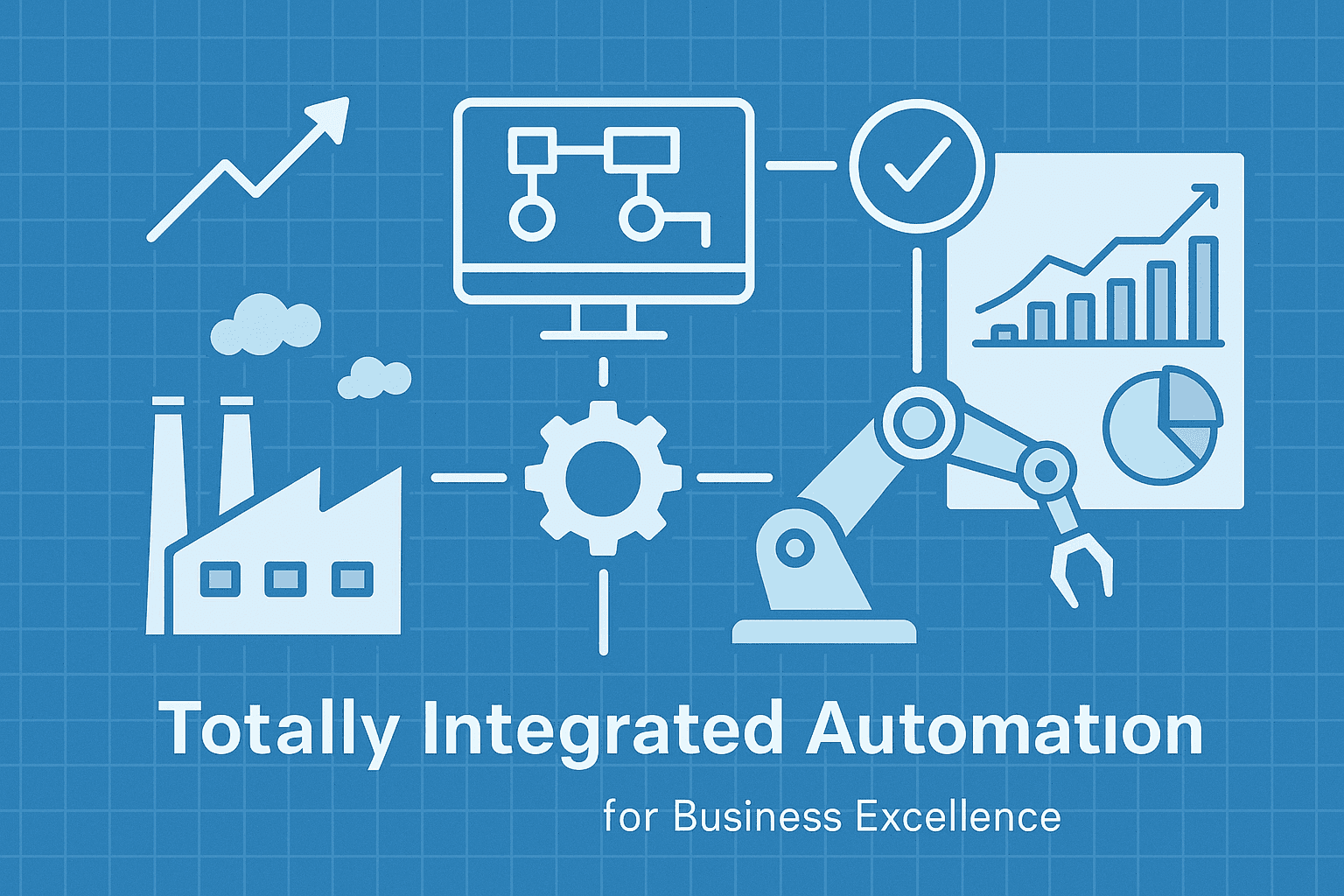
Understanding Totally Integrated Automation (TIA)
In today's rapidly evolving European industrial landscape, businesses face ever-increasing demands for efficiency, flexibility, and real-time decision-making. Siemens' Totally Integrated Automation (TIA) stands out as a transformative blueprint to meet these demands head-on by seamlessly integrating all automation components into a unified system. Understanding this concept is crucial for CEOs, IT managers, and marketing leaders focused on smart automation and modern digital strategies.
TIA represents a comprehensive automation framework where hardware, software, and communication systems are interlinked to operate as one cohesive unit. Traditionally, manufacturing and industrial processes were managed through isolated systems with fragmented interfaces, causing delays, errors, and complexity in operation. TIA breaks these barriers by creating a digital thread that connects controllers like PLCs (Programmable Logic Controllers), human-machine interfaces (HMIs), drives, and industrial networks within a single engineering environment known as the TIA Portal.
This unified platform simplifies engineering workflows by enabling planners, operators, and maintenance teams to collaboratively work on the same system, reducing development time significantly while boosting system reliability. For instance, Siemens’ latest TIA Portal updates emphasized increased cross-discipline collaboration, supported by integrated diagnostics and simulation tools which empower rapid troubleshooting and predictive maintenance—key differentiators in meeting European industry 4.0 standards.
Moreover, TIA is not merely a technical solution but a strategic enabler for digital transformation. It supports transparent data flow from the factory floor to enterprise-level IT systems, unlocking actionable insights with minimal integration hurdles. This is especially relevant in Europe, where regulatory frameworks and sustainability targets drive demand for sophisticated energy management and process optimization – areas where TIA excels by integrating monitoring and control functions seamlessly.
Case in point, a German manufacturing company leveraged TIA to unify their production lines with real-time control and analytics, achieving a 20% increase in throughput and a 15% reduction in energy consumption—an impressive balance between operational excellence and environmental responsibility.
For businesses aiming to harness the full potential of automation, TIA's modular architecture allows scalable implementation. Whether upgrading existing machinery or building greenfield projects, it adapts to diverse industry needs ranging from automotive assembly to pharmaceutical manufacturing, aligning with the European Union’s drive towards Industry 5.0, emphasizing human-centric, sustainable, and resilient manufacturing systems.
In summary, understanding Totally Integrated Automation means grasping how a seamless ecosystem of automation components, enabled by a single engineering framework, can turbocharge efficiency, reduce operational complexity, and provide a future-proof foundation for smart factories. In a European context, it equips companies to comply with stringent digital and sustainability mandates while accelerating innovation and business excellence. Staying ahead in this automation revolution starts with embracing the TIA philosophy—integrated, intelligent, and infinitely adaptable.
Sources:
- Siemens TIA Portal official insights (2025)
- SPS-MAGAZIN on TIA and Industry 4.0 integration (2025)
- Case studies from leading German manufacturers leveraging TIA (2025)
- Elektro-Technik Vogel: Enhancing engineering efficiency with TIA (Nov 2025)
Components of Totally Integrated Automation Systems
In the evolving landscape of industrial automation, Totally Integrated Automation (TIA) represents a pivotal shift characterized by seamless integration of technologies and processes to drive business excellence. For European enterprises striving to stay competitive, understanding the core components of TIA systems is crucial. These components work harmoniously to dismantle traditional siloed automation and unlock new efficiencies, agility, and insights.
At the heart of TIA lie the programmable logic controllers (PLCs), which serve as the brains controlling machinery and operations. Modern Siemens SIMATIC S7 series PLCs exemplify this—providing not only robust control but built-in connectivity through PROFINET for real-time communication with other components and higher-level business systems. This integration capability eliminates costly, fragile custom interfaces, creating a unified data and control stream across the plant. For example, the SIMATIC S7-1200 and S7-1500 models offer scalable solutions for everything from simple machines to complex production lines, adaptable to varied manufacturing needs across Europe’s diverse industrial sectors.
Next are Human-Machine Interfaces (HMIs), which transform how operators interact with equipment. Advanced HMI panels integrate smoothly into TIA ecosystems, offering intuitive, graphical visualization and control in real time. By centralizing command and monitoring functions, HMIs reduce human errors and accelerate decision-making, crucial for plants aiming to meet stringent quality and safety standards prevalent in European markets.
Drives and motor controls also form a key component. Siemens SINAMICS variable speed drives, for instance, can be commissioned and controlled directly via the TIA Portal software. This direct integration allows precise motion control tailored to production requirements, energy-efficient operation, and simplified maintenance. Such capabilities resonate strongly with Europe’s increasing emphasis on sustainable manufacturing.
Complementing these hardware components is the TIA Portal—the single engineering environment that unifies programming, configuration, and diagnostics across devices. This software backbone reduces engineering time significantly by enabling consistent workflows and data coherence from the controller, through networks, to visualization and drives. For European IT managers and system integrators, the TIA Portal represents a strategic tool for lowering labor costs and accelerating time-to-market without compromising system robustness.
Underlying TIA's hardware and software is a standard communication platform—primarily PROFINET and Industrial Ethernet—which ensures high-speed, secure, and deterministic data exchange. This standardized network infrastructure is critical in scaling automation across multiple manufacturing sites and facilitating Industry 4.0 initiatives like predictive maintenance and real-time analytics, increasingly demanded by European customers.
European firms also benefit from integrated safety components within TIA systems, such as fail-safe PLCs and safety I/O modules, all designed to meet strict EU machinery safety directives. This dual-use of standard and safety automation on a common platform streamlines compliance and reduces complexity.
In sum, the components of Totally Integrated Automation are not isolated technologies but part of a holistic ecosystem. They deliver unified control, visualization, communication, and safety functionality that empowers businesses to innovate and excel amid dynamic market demands. For European enterprises poised to embrace digital transformation, mastering these components is the blueprint for future-proof, smart automation.
The Role of Industry 4.0 in Totally Integrated Automation (TIA)
Industry 4.0 stands at the heart of modern industrial transformation, acting as the driving force empowering Totally Integrated Automation (TIA) solutions to transcend traditional automation boundaries. In Europe, where manufacturing sophistication and digital transformation go hand in hand, Industry 4.0 and TIA together form a blueprint for agility, precision, and resilience.
Industry 4.0 is characterized by the convergence of cyber-physical systems, Internet of Things (IoT), cloud computing, advanced robotics, and data analytics, creating smart, interconnected production ecosystems. This technological confluence amplifies TIA’s contribution from simply connecting machines to enabling real-time, intelligent orchestration of entire value chains. The ability to unify production processes, enterprise IT, and supply networks leads to swift adaptation to market dynamics and reduced downtime. According to the latest 2025 Industry 4.0 market report, Europe’s Industry 4.0 market is expected to grow from $47 billion in 2025 to $136 billion by 2033, signaling rapid adoption of these integrated automation technologies across sectors including manufacturing, automotive, and logistics (Straits Research, 2025).
In practical terms, Industry 4.0 facilitates predictive maintenance and asset optimization by leveraging sensor networks and real-time data streams embedded in TIA systems. Digital twins—virtual replicas of physical assets—allow simulation and forecasting that reduce unplanned stoppages and optimize production parameters. Siemens’ TIA seamlessly incorporates these capabilities, demonstrating how industrial software and hardware blend to create open, scalable automation ecosystems that can evolve as business needs grow (Manufacturing Technology Insights, 2026).
Furthermore, Industry 4.0 underpins the democratization of data-driven decision-making in TIA environments. Organizations treating data as their strategic asset integrate datasets from machines, humans, products, and partners to enable real-time insights and autonomous decisions (CIO, 2025). This shift to responsive, intelligent manufacturing, sometimes referred to as “smart factories,” significantly improves productivity and quality while reducing environmental footprints.
The integration of AI and machine learning within Industry 4.0-driven TIA systems is revitalizing traditional automation roles. These technologies analyze complex datasets continuously, offering workflow optimizations and anomaly detection. For European companies, this means heightened competitiveness in a global market increasingly valuing customization and rapid delivery.
From the perspective of regional dynamics, Europe's strong regulatory frameworks promoting sustainability and data security complement Industry 4.0’s advancement. Automation solutions equipped with intrinsic cybersecurity measures and energy-efficient protocols align perfectly with the EU Green Deal ambitions and GDPR compliance mandates.
To summarize, Industry 4.0’s role in TIA is transformative: it elevates automation from isolated control units to intelligent, holistic business enablers that are agile, efficient, and future-proof. For European enterprises, investing in TIA with an Industry 4.0 mindset is no longer optional but essential for sustained operational excellence and market leadership in 2026 and beyond.
Sources:
- Europe Industry 4.0 Market Size, Share, Trends & Insights Report by 2033 — Straits Research, 2025
- Europe’s Smart Manufacturing Transformation Led by Industrial Software — Manufacturing Technology Insights, 2026
- Industry 4.0: Embracing the Future of Industrial Automation to Build a Resilient Business — CIO, 2025
- Industry 4.0 and the Future of Automation — ISA Interchange Blog, 2025
Benefits of Implementing Totally Integrated Automation
In the evolving landscape of European manufacturing and smart industries, Totally Integrated Automation (TIA) emerges as a critical enabler of business excellence. Companies in Europe are increasingly turning to TIA systems to streamline operations, boost productivity, and future-proof their industrial performance — and there’s ample evidence supporting the transformative benefits these systems deliver.
One of the standout advantages of TIA is the seamless integration it provides across the entire production process. Unlike traditional setups with disparate automation components, TIA breaks down silos by linking machines, control systems, and software platforms into a cohesive digital ecosystem. This interconnectedness enables real-time data exchange and system-wide visibility, something that European manufacturers leverage heavily to meet demanding regulatory standards and quality benchmarks. As reported by industry analysts, this integration translates into faster project delivery cycles and reduces complexity in troubleshooting, laying a solid foundation for the adoption of advanced automation technologies such as AI and predictive maintenance.
Operational efficiency is another key benefit directly tied to TIA implementation. European manufacturers face relentless pressure to optimize throughput while minimizing waste and downtime. TIA solutions facilitate this by allowing comprehensive monitoring and control through a unified user interface, which means operators can make rapid, informed decisions to avoid bottlenecks and machine failures. Case studies show predictive diagnostics reducing unplanned downtime by significant margins, sometimes upwards of 20%, according to recent automation conference insights from leading vendors in Germany and the Netherlands.
Moreover, TIA enhances agility and flexibility — attributes that are increasingly critical in fast-paced European markets driven by customization and short product lifecycles. The integrated nature of TIA systems simplifies the modification of production workflows, enabling faster shifts between product variants without costly retooling. This agility not only cuts operational costs but also improves a company's responsiveness to market demands, giving European businesses a competitive edge globally.
Sustainability considerations further motivate TIA adoption in Europe, where stricter environmental policies are pushing manufacturers to optimize energy use and reduce emissions. The integration of energy management tools within TIA environments allows businesses to measure and control energy consumption at each stage of production. Insights derived from these integrated systems empower companies to enact data-driven actions for greener operations, aligning with the EU’s ambitious green transition goals.
Finally, from a workforce perspective, TIA facilitates upskilling and improves job satisfaction by reducing manual, repetitive tasks and enabling employees to engage in higher-value activities. The unified automation environment supports training and change management efforts, easing the transition to smart factories.
In summary, the benefits of implementing Totally Integrated Automation in Europe are profound: faster time-to-market, heightened operational efficiency, enhanced flexibility, energy-efficient processes, and empowered personnel. These advantages collectively form the blueprint for business excellence, enabling European enterprises to thrive in the era of Industry 4.0 and beyond.
Challenges and Solutions in TIA Adoption
Adopting Totally Integrated Automation (TIA) in European enterprises offers transformative potential but comes with notable challenges. Addressing these hurdles is key for CEOs, IT managers, and marketing professionals striving to fully leverage automation for business excellence in 2026.
Complexity of Integration with Legacy Systems
One of the primary challenges is integrating TIA solutions into existing legacy infrastructure. Many European companies have heterogeneous systems accumulated over years that lack the APIs and architectural flexibility required by modern automation platforms. This legacy complexity slows rollout and reduces initial ROI. To overcome this, firms need a phased modernization approach. Investing in middleware and adopting IoT gateways enable existing machines and controls to communicate within a unified TIA ecosystem without demanding wholesale equipment replacement. Select vendors who provide open, modular architecture with extensive backward compatibility. This approach ensures smooth data flow while protecting prior capital investments.
Skill Shortages and Workforce Readiness
Despite the industry push for automation, there remains a significant shortage of skilled automation engineers and system integrators in Europe. Additionally, workforce resistance can occur due to fears of job displacement or unfamiliarity with new systems. Successful TIA adoption mandates extensive training and reskilling initiatives that empower employees rather than sidelining them. European firms excel by embedding continuous learning cultures, offering hands-on workshops, and partnering with vocational institutions to fill skill gaps. Leadership alignment on the benefits of automation for workforce productivity is also vital for accelerating change acceptance.
Cybersecurity and Data Privacy Concerns
As TIA inherently relies on interconnected devices and cloud-enabled analytics, cybersecurity risks amplify. European regulations such as the GDPR impose strict requirements on data privacy that designs must respect. Enterprises must adopt a security-by-design philosophy, implementing network segmentation, real-time monitoring, and end-to-end encryption. Utilizing AI-powered threat detection specifically attuned to ICS/SCADA environments helps preempt breaches and unauthorized access. Engaging cybersecurity experts familiar with the industrial automation domain ensures compliance and resilience against evolving threats.
Cost Pressures and ROI Demonstration
High upfront costs for hardware, software licenses, and system integration can be a deterrent, especially for SMEs lacking large capital budgets. Demonstrating clear ROI is challenging amid complex automation timelines and multi-faceted benefits spanning productivity, quality, and compliance. To tackle this, European businesses benefit from adopting scalable pilot projects that rapidly prove value before full-scale deployment. Leveraging analytics from pilot data helps articulate quantified productivity gains and reduces stakeholder skepticism. Moreover, exploring government grants and EU innovation programs focused on digital transformation can ease capital constraints.
Interoperability and Standards Alignment
Europe’s industrial landscape features diverse machine brands and evolving Industry 4.0 standards. Ensuring interoperability between TIA components (PLCs, drives, HMI, MES) from varied vendors is demanding but essential for flexibility and future-proofing. Embracing established Industry 4.0 protocols such as OPC UA and vendor-neutral platforms prevents vendor lock-in. Active participation in European automation consortia and standards bodies aids companies in staying ahead of compliance requirements.
In summary, the challenges surrounding TIA adoption in Europe today revolve around integration, skills, security, costs, and interoperability. Forward-thinking firms that invest in modern integration techniques, empower their workforce, secure their infrastructure rigorously, validate ROI through pilots, and adopt open standards are best positioned to convert these challenges into competitive advantages. This strategic focus not only facilitates smoother transition but also unlocks the full potential of TIA as a cornerstone of business excellence.
Case Studies: Successful TIA Implementations
In 2023 and beyond, Totally Integrated Automation (TIA) has demonstrated its transformative impact on industry leaders across Europe, positioning itself as a cornerstone of business excellence through smart automation. The successful integration of TIA reveals clear advantages in operational efficiency, production flexibility, and digital transformation readiness that resonate with forward-thinking CEOs, IT, and marketing managers in the region.
One notable example is the automotive sector, where Audi leveraged TIA to revolutionize its factory operations for premium model production. By deploying Siemens’ TIA framework, Audi achieved unprecedented standardization across complex manufacturing processes, significantly reducing inefficiencies and downtime. The seamless integration of controllers, HMI, SCADA, and drives within a unified engineering environment enabled real-time data monitoring and process optimization, ensuring a flexible production line capable of rapid model changes. This level of integration not only boosted productivity but also ensured scalability for future digital challenges—a critical factor in Europe’s competitive automotive market (SPS Magazin, 2025).
In another case, CollabraTech Solutions, a smart automation integrator, tackled post-pandemic supply chain disruptions successfully by partnering with Siemens and adopting the SIMATIC TIA portfolio. This strategic move helped maintain their production targets and delivery commitments while opening new market channels. Their TIA-powered automation and control framework provided end-to-end visibility and control, allowing fast decision-making and agile responses to supply variabilities—elements crucial to business resilience in today’s volatile market environment (Heitek, 2025).
Further success stories arise in sectors that prioritize both efficiency and innovation. For instance, machine builders across Germany are increasingly adopting TIA Portal for engineering workflows. This single platform allows holistic programming and commissioning of controllers and distributed I/O systems, minimizing engineering errors and accelerating time-to-market. Such improvements translate directly into competitive advantages by lowering production costs and enhancing machine reliability and flexibility (Elektrotechnik Vogel, 2025).
European companies benefit from TIA's openness and integration with Industry 4.0 elements, such as AI and machine learning modules. This extended integration boosts predictive maintenance, quality control, and adaptive production tuning, forming the backbone of smart manufacturing ecosystems. Leading firms deploying these solutions report improved operational transparency, significantly reducing unplanned downtimes and optimizing resource utilization (Kamexa AI, 2025).
Collectively, these cases underline the vital role TIA plays in building a future-proof industrial infrastructure. The combination of a best-in-class engineering portal, modular hardware, and data-centric tools is granting businesses in Europe the blueprint for operational excellence and strategic growth. As automation technologies evolve, successful implementations of TIA continue to exemplify how automation systems can not only streamline production but also deliver organizational agility to thrive in a rapidly changing market landscape.
For decision-makers in Europe’s manufacturing and engineering sectors, these case studies offer practical proof points: adopting Totally Integrated Automation is not just a technical upgrade but a strategic imperative to cultivate innovation, resilience, and competitiveness on the continent and beyond.
Future Trends in Automation Technology
As we look ahead into 2026 and beyond, the future of automation technology in Europe is poised for transformative shifts that will redefine how businesses operate and compete. For CEOs and IT managers steering their enterprises through this evolving landscape, understanding these emerging trends offers a blueprint for maintaining competitive advantage and operational excellence.
One of the most significant drivers is the deepening integration of Artificial Intelligence (AI) with automation systems. Industry leaders like FANUC UK highlight AI-driven automation as a key trend, where intelligent robotics and autonomous systems don't just perform predefined tasks but learn and adapt in real time. This evolution enables smarter, more flexible manufacturing processes that can respond dynamically to changing production requirements and market demands. For example, AI-driven robots paired with edge computing empower operators with real-time insights, reducing downtime and optimizing throughput.
In Europe, the rise of open ecosystems is accelerating this innovation. Collaborative platforms where hardware providers, software vendors, and system integrators work in synergy are enabling seamless integration of various automation components. This openness fosters scalability and interoperability, allowing businesses to adopt new technologies without vendor lock-in. AccelyBiz’s focus on smart automations aligns precisely with this approach—building modular, future-proof solutions that evolve with enterprise needs.
Sustainability is another pivotal trend shaping the future of automation. With Europe's ambitious climate goals, there is growing demand for automation systems that not only boost efficiency but also minimize environmental footprint. Sustainable manufacturing practices powered by sensor-driven workflows and predictive analytics are becoming standard. Companies adopting these green automation solutions can reduce waste, energy consumption, and improve resource utilization, which resonates both with regulatory compliance and corporate social responsibility.
Furthermore, hyperautomation and intelligent efficiency will be at the forefront. Hyperautomation refers to the orchestrated use of multiple technologies such as AI, robotic process automation (RPA), and machine learning to automate complex business processes end-to-end. By 2026, Gartner predicts that 30% of enterprises will automate more than half of their network activities, freeing up human talent to focus on high-impact strategic initiatives. This progression mirrors the broader shift from isolated automation tasks to enterprise-wide digital transformation.
Europe’s emphasis on digital sovereignty and data privacy also shapes automation trends. Businesses are increasingly investing in localized cloud infrastructures and compliant AI models to ensure data control while leveraging automation benefits. Integration of AI agents that comply with stringent GDPR requirements and domain-specific workflows is becoming essential. For instance, healthcare and manufacturing sectors demand domain-enriched AI models that understand regulatory nuances alongside operational needs.
Lastly, the convergence of AI and Industry 4.0 technologies — including digital twins, IoT, and augmented reality — will empower predictive maintenance, enhanced quality control, and employee training. Digital twins provide virtual replicas of physical assets enabling simulation and optimization without impacting actual production. This capability increases responsiveness and reduces costs, crucial for European manufacturers facing global competition.
In sum, the future of automation technology in Europe centers on AI-powered adaptability, open collaborative ecosystems, sustainability, hyperautomation, and data sovereignty. Forward-thinking companies that embrace these trends and incorporate them into their Totally Integrated Automation (TIA) strategies will unlock new levels of business excellence, resilience, and innovation.
By anticipating and investing in these advancements, AccelyBiz clients will position themselves at the vanguard of the smart automation revolution, achieving operational efficiency and sustained competitive growth in an increasingly complex and fast-paced market environment.
Measuring Success: KPIs for Totally Integrated Automation (TIA)
In the rapidly evolving landscape of European industry, Totally Integrated Automation (TIA) has become a cornerstone for operational excellence. Yet, the key to harnessing TIA's full potential lies not just in implementation but in quantifiable success measurement. As we step into 2026, enterprise leaders—from CEOs to IT and marketing managers—must focus sharply on defining and monitoring KPIs that reflect real business impact, technological integration, and sustainability.
Real-Time Performance and Production KPIs
For European manufacturers, operational efficiency is paramount. Key performance indicators around Overall Equipment Effectiveness (OEE) provide critical insight, measuring the availability, performance, and quality rates of equipment within the TIA ecosystem. Leading companies are coupling OEE with real-time data analytics using Industrial IoT (IIoT) and digital twins—technologies increasingly embedded within TIA environments. This allows for dynamic production simulation and predictive maintenance, significantly reducing downtime and unplanned stoppages. For example, firms deploying TIA alongside integrated analytics have reported OEE improvements exceeding 10%, directly boosting throughput and cost savings.
Integration and Data Flow KPIs
The hallmark of TIA is seamless integration across automation components, software platforms, and enterprise systems. KPIs that track data interoperability—such as system uptime, data latency, and process synchronization rates—are essential. European smart factories increasingly prioritize measuring the success of system harmonization and consistent data flow, ensuring the right information reaches decision-makers instantly across sites. Monitoring real-time data exchange rates, error reduction in communications, and integration points between ERP, MES, and SCADA systems helps safeguard against operational bottlenecks. Automation leaders use these KPIs to confirm that their TIA architecture is truly unified and responsive, a critical factor for competitive agility.
Energy Efficiency and Sustainability Metrics
Sustainability is non-negotiable in Europe’s industrial sector, influenced heavily by regulatory frameworks and corporate social responsibility. TIA adoption success is often gauged through energy consumption metrics per unit of output or carbon emissions reductions facilitated by automation-driven process optimization. Smart automation solutions embedded within TIA frameworks can adjust machine operation dynamically to reduce energy waste. Leading manufacturers report that these KPIs tie directly to bottom-line savings while advancing compliance with stringent EU climate goals. Trending KPIs include energy use per machine hour, percentage of renewable energy utilized in operations, and efficiency gains from automated load balancing.
ROI and Innovation Impact KPIs
Investment in TIA requires robust financial justification. Thus, KPIs measuring Return on Investment (ROI) are foundational—covering payback period, total cost savings, and uplift in production value attributable to automation. Beyond pure financials, innovation KPIs track the speed of adopting new automation modules, frequency of AI and machine learning enhancements, and the reduction in manual interventions. Recent European research highlights that companies that align these innovation metrics with business objectives see significantly higher automation ROI, often exceeding initial forecasts. These KPIs also reflect the company’s readiness to evolve in line with Industry 4.0 standards, blending human and machine collaboration effectively.
Workforce and Change Management KPIs
Finally, TIA’s success is tightly linked to human factors. KPIs assessing workforce adaptability—such as employee training completion rates, automation adoption rates across departments, and reductions in operational errors due to automation—offer insights into change management effectiveness. European companies excelling in TIA adoption invest heavily in upskilling workers to manage and collaborate with automated systems. Measuring these KPIs ensures the human-machine synergy is optimized, driving both productivity and employee satisfaction.
In summary, TOTALLY INTEGRATED AUTOMATION is more than just technology; it is a strategic enabler of operational excellence. The most impactful KPIs in 2026 encompass performance, integration, sustainability, financial returns, and workforce adaptation—each offering a quantifiable lens on automation success. Europe’s forward-thinking enterprises are blending these metrics into comprehensive dashboards that deliver continuous insights, enabling dynamic and data-driven decisions that propel business growth. Adopting this KPI-driven approach to TIA is your blueprint for tomorrow’s business excellence.
Integration of AI and Machine Learning in Automation
As industries across Europe continue to embrace digital transformation, the integration of Artificial Intelligence (AI) and Machine Learning (ML) with automation systems like Totally Integrated Automation (TIA) is reshaping how businesses operate and compete. The year 2026 marks a transformative period where AI goes beyond hype to deliver pragmatic, scalable value, particularly in automation-centric environments.
The core advantage of embedding AI and ML within automation frameworks lies in enhanced decision-making and operational efficiency. Unlike traditional automation which follows fixed programming, AI-driven automation leverages predictive analytics and adaptive learning to optimize processes in real-time. For example, manufacturing plants equipped with AI-enhanced TIA systems can predict maintenance needs of machinery, dynamically adjust production parameters, and reduce downtime without human intervention. This ability to learn from sensor data and environmental changes is a key differentiator in intelligent automation.
Europe's industrial scene is witnessing increased AI adoption due to strategic initiatives and regulatory support. The European Union's push for AI gigafactories and its regulatory emphasis on trustworthy AI is fostering an environment where companies can confidently embed AI models that comply with privacy and ethical standards. This is crucial for businesses mindful of data sovereignty and ethical AI use while pursuing automation excellence.
Moreover, by integrating ML algorithms, automation systems evolve from reactive controls to proactive agents. This integration is crucial for industries facing volatile market demands and supply chain complexities, common in European manufacturing and logistics hubs. AI's agent-based capabilities enable multi-agent orchestration—coordinated control among various robotic and automated systems—leading to seamless workflows and improved resource utilization.
One practical application is in quality assurance, where ML models analyze production data to detect subtle anomalies that typical control systems might miss. Early identification of defects not only decreases waste but helps companies meet stringent EU quality standards, boosting competitiveness in global markets.
For IT and operational leaders in Europe, this integration means rethinking their automation roadmap. It’s no longer enough to deploy programmable logic controllers (PLCs) or standard sensors. The future lies in converging AI with automation platforms, supported by continuous data flows and edge computing to handle processing near the equipment for real-time insights.
A recent Gartner report predicts that nearly half of enterprise applications will embed AI agents by 2026, underscoring the urgency for businesses to align their automation strategies with AI capabilities. European companies investing in these hybrid AI-automation architectures witness measurable gains in throughput, flexibility, and predictive maintenance success rates.
In summary, integration of AI and ML in automation within Europe is not just a technology upgrade but a strategic imperative. It facilitates a shift towards smart factories and autonomous processes, key for sustaining business excellence in an increasingly competitive and regulated marketplace. For European CEOs and IT managers, leveraging AI-empowered automation is the blueprint for resilience, innovation, and operational mastery in the years ahead.
Creating a Roadmap for Business Excellence with Totally Integrated Automation (TIA)
As European businesses gear up for 2026, crafting a strategic roadmap for implementing Totally Integrated Automation (TIA) is crucial for sustainable growth and competitive edge. TIA isn’t just about slapping together components; it demands a carefully sequenced approach that aligns technology, people, and processes seamlessly. Here’s a robust framework to guide leaders in manufacturing, industrial sectors, and beyond to extract maximum value from TIA.
Establish Clear Business Objectives and Automation Goals
Start by pinpointing specific outcomes you want from TIA—be it enhanced operational efficiency, reduction of downtime, quality improvements, or faster time-to-market. In Europe, where regulatory compliance and energy efficiency are paramount, these goals should also reflect sustainability targets and adherence to EU directives. For instance, integrating real-time energy monitoring within TIA systems aligns with Europe's Green Deal ambitions, turning compliance into a competitive advantage.
Build a Strong Foundation with a Current State Assessment
Next, conduct a comprehensive audit of existing automation infrastructure, IT environment, and workflows. Identify bottlenecks, legacy system constraints, and data silos that could hinder integration. Modern European factories increasingly rely on data interoperability standards like OPC UA, so your roadmap must address seamless connectivity and data flow across all devices and enterprise systems.
Prioritize Integration and Interoperability
A critical success factor in TIA adoption is the smooth integration of diverse shop-floor components—PLCs, HMIs, SCADA, drives, and more—into a cohesive digital ecosystem. Leverage modular, scalable solutions that accommodate Industry 4.0 technologies such as predictive maintenance and digital twins. This enables phased implementation, reducing risk while progressively unlocking automation benefits.
Invest in Workforce Enablement and Change Management
Europe’s manufacturing workforce requires upskilling to operate and optimize TIA systems effectively. Embedding comprehensive training programs and fostering a culture that embraces automation are non-negotiable. Leading companies establish Centers of Excellence for automation, ensuring continuous knowledge-sharing and best practices dissemination.
Define Metrics and Feedback Loops for Continuous Improvement
Your roadmap must incorporate mechanisms to measure performance against KPIs such as Overall Equipment Effectiveness (OEE), mean time to repair, and energy consumption metrics. Advanced analytics integrated within TIA systems help identify patterns and opportunities for incremental improvements. This data-driven approach propels business excellence beyond initial implementation.
Align with Future Trends and Emerging Technologies
Looking ahead, anticipate the integration of AI and machine learning as standard components within TIA. European companies are increasingly adopting AI-driven process orchestration for smarter decision-making and adaptive automation. Your roadmap should remain flexible to incorporate such advancements, ensuring long-term resilience and innovation.
Practical Example: A European Automotive Supplier’s TIA Roadmap
Consider a tier-1 automotive supplier in Germany. They began with a digital maturity assessment followed by a pilot integrating robotics and PLC control with centralized orchestration software. Concurrently, operator training focused on digital literacy and troubleshooting. Early wins included a 15% reduction in downtime and better energy use visibility. With success demonstrated, the roadmap expanded to full-line integration with predictive analytics next, embedding continuous improvement into the business DNA.
Crafting a TIA roadmap in 2026 Europe demands balancing immediate operational goals with strategic foresight in automation adoption. By harmonizing technology, people, and processes thoughtfully, organizations unlock profound business excellence—not just automation efficiency, but agility, sustainability, and innovation positioned for the future.