
Creating Your Own Professional Website: The Ultimate Guide to Success
In 2026, a professional website for a company is no longer a luxury, but a crucial pillar of success. Especially for modern companies in the...
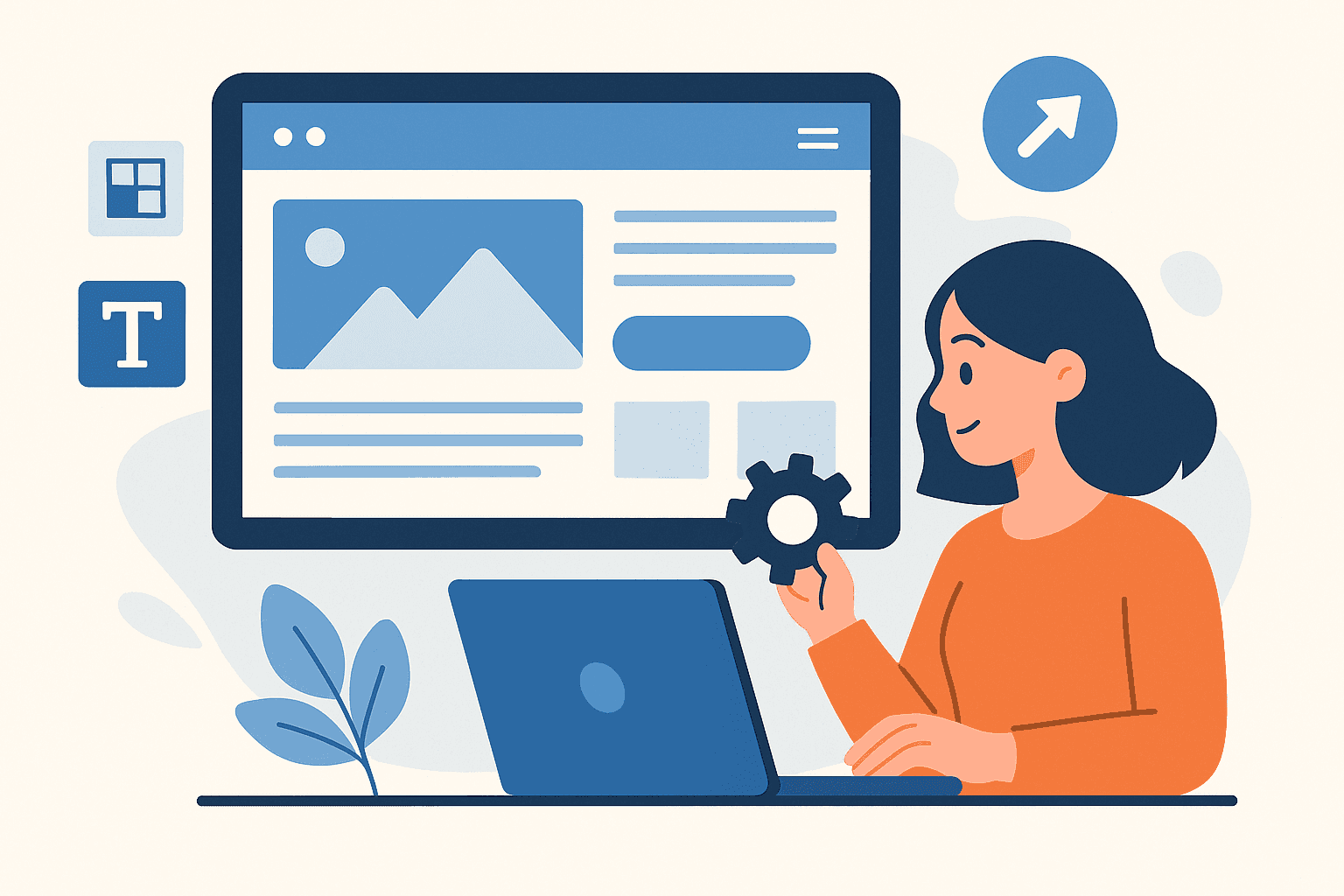
Why a professional website is important for your business
In 2026, a professional website for a company is no longer a luxury, but a crucial pillar of success. Especially for modern companies in the Netherlands and Europe, the website is the digital business card with which you make the first and often decisive contact. Today, most customer journeys start online, and all important customer decisions are based, among other things, on what they find online. A shoddy or amateurish website immediately calls into question the reliability and quality of your business. Research shows that an outdated or unprofessional website can greatly undermine trust with potential customers.
A professional website reflects your company's values and identity in a modern, consistent and attractive way. This goes far beyond just a beautiful design: it includes optimal usability, fast load times, seamless mobile experiences and clean content that connects directly with your target audience. It ensures that visitors easily find what they are looking for, and that your offer comes across as credible and professional. Especially in a competitive European market where consumers have high expectations, a well-designed website creates trust and sets you apart from competitors.
In addition, a professional website is the foundation on which your marketing and sales activities rest. SEO optimization ensures that you are found on relevant keywords. Integrations with modern tools and automations turn your website into active sales channels that generate leads 24/7. Complying with the latest European legislation around digital accessibility (such as the European Accessibility Act that comes into force in 2025) is also something a professional website responds to. This not only allows you to reach a wider audience, but also prevents risks and fines.
A current real-life example: small and medium-sized companies in the Netherlands see their online sales increase after having a professional website created that matches the latest trends in web design and functionality. The ability to convert visitors increases because the site is responsive, works fast and offers good content. Moreover, a professional website increases your chances of closing collaborations, because business associates also value a serious online presence.
In short, a professional website in 2026 is not just a platform to be found, but a versatile strategic tool that builds trust, connects and drives commercial growth. For CEOs, IT managers and marketing executives, investing in a professional, modern website is therefore essential to staying relevant in today's and tomorrow's digital economy.
Web design basics: Colors, fonts and layout
In 2026, effective Web design is about more than aesthetics; it's about creating an intuitive and engaging digital experience that aligns with your brand's identity and your target audience's expectations. For modern professionals such as CEOs, IT and marketing managers, it is crucial to be strategic about colors, fonts and layout when designing a website.
Colors: tranquility and focus with powerful accents
A striking trend in Europe, and thus also in the Netherlands, is the use of soothing, light basic colors with lots of white space. This creates overview and breathing space so visitors can quickly orient themselves and easily absorb content. Minimalist use of color, however, does not mean dullness. Combining a limited palette with one or two strong accent colors creates a modern, recognizable look that reinforces the brand. For example, this could be a deep blue hue that exudes reliability, complemented by an energetic orange or vibrant green to accentuate call-to-actions.
In addition, accessibility is gaining importance: contrast ratios between text and background should meet WCAG standards so that even people with visual impairments can navigate comfortably. This makes the website more inclusive and more findable in search engines.
Fonts: powerful, clean and with character
Typography is increasingly becoming a stylish design feature. For professional websites, it is essential to establish a clear hierarchy of text through smart choices in fonts, sizes and weights. Sleek, modern yet warm-looking sans serif fonts currently dominate; they provide an accessible reading experience on all screen sizes. For headlines and key elements, striking, sometimes vintage-inspired fonts are often employed that add character and draw attention without being distracting.
An authentic trend is the subtle use of kinetic typography - dynamic text that moves or changes style as you scroll. This generates engagement without disrupting the user experience. Just be sure that readability is always paramount, especially on mobile.
Layout: clarity with an organic flow
In layout, we see a movement away from strict grids to more fluid, organic structures. This emphasizes humanity and intuitive navigation. Websites often have increasingly varying sections with asymmetrical blocks and subtle wavy lines that create natural rhythms. Micro-interactions, such as slightly pulsing buttons that provide feedback, make the Web site interactive and user-friendly.
Visual hierarchy is crucial: the most important information - such as services, contact information and call-to-action buttons - should stand out immediately through clever use of size, color and positioning. This boosts conversions and ensures that visitors find what they are looking for effortlessly.
Case study in the Netherlands
Imagine a tech company that provides smart automations. The website could use a calm blue-gray background, with neon blue accents on contact buttons. The logo and headlines are done in a bold, modern sans-serif font, while supporting text is in a slightly friendlier font. The homepage displays an asymmetrical grid with bright sections, each with micro-interactions that create a flow. This makes the visitor feel welcome and professionally served.
Conclusion
For a professional website in 2026, it is essential to fuse color, typography and layout to create a harmonious, accessible and purposeful user experience. Calm colors with powerful highlights, modern but readable fonts and an organic, intuitive layout are the pillars. By cleverly handling these, you not only support your brand identity but also increase conversion and customer loyalty - indispensable in today's dynamic Dutch-language market.
Roadmap for choosing a domain name
A strong domain name is the foundation of your online presence and plays a crucial role in the success of your website. For CEOs, IT managers and marketing professionals in Europe, choosing the right domain name is a strategic step that goes beyond simply checking availability. In 2026, it requires a deliberate approach, taking into account trends and technical requirements in today's digital market.
1. Start with your brand and target audience in mind
Your domain name should be instantly recognizable as part of your brand while clearly communicating what you do. Choose a name that is easy to remember and aligns with the core of your business. For example, if you offer a smart automation solution, avoid generic names and focus on something unique that emphasizes your specialization. This will help not only visitors but also search engines index your website better.
2. Keep it simple and relevant
Complex and long names cause spelling mistakes and less word of mouth. It is good to choose a short, powerful name that is easy to spell and pronounce, for example, a maximum of 15 characters. Avoid numbers, hyphens and special characters that can cause confusion. The name should be as intuitive as possible for your European target audience - so be sure to choose names that fit the language and culture of your market.
3. Choose the right domain extension (.nl, .com, .eu, etc.).
The extension (.tld) is just as important as the name itself. If you want to operate locally, a .nl extension is ideal for the Netherlands and a .be for Belgium. For a broader European or international audience, .com or .eu is preferable because of recognition and reliability. New relevant niche extensions such as .tech, .cloud or .io can also be used if they reflect your expertise well.
From April 2026 a new round of applications for additional domain extensions will start at ICANN; this offers opportunities for you to invest in appropriate and unique extensions that enhance your business image (SIDN, 2025).
4. Check availability and permissions
Use reliable local registrars such as SIDN for .nl domains or international parties for .com. Also check that the name is not already registered on social media and as a trademark to avoid legal problems. It is wise to register variants and common misspellings in advance so competitors cannot claim them.
5. Think ahead about SEO and branding
Your domain name directly affects your search engine ranking. Integrate relevant keywords whenever possible without making the name unnatural. For example, for a smart automation company, a term like "smart" or "automation" in the name can help, as long as it remains compact and accessible. A good domain name facilitates branding, memorability and link building - all crucial SEO factors.
6. Register your domain name quickly and securely
After careful consideration, register your domain name as soon as possible. With the popularity of digital presence, a good domain name can be quickly given up. Choose a registrar that also offers you hosting, security and easy management to keep your website professional and secure (Hosting2GO, 2025).
By carefully following these steps, you will take a substantial step toward a powerful online positioning that both differentiates your brand and is technically robust in 2026. After all, a professional domain name is not only your digital business card, but also a strategic investment in the growth and findability of your business.
The best platforms for creating a website: Pros and cons
Choosing the right platform to build a professional Web site is critical to success. Each platform has its own strengths, limitations and pricing structures, which determine whether it fits your business needs and technical expertise. For European businesses in 2026, where digital presence is increasingly defining, it is important to choose a platform that is not only user-friendly, but also scalable, secure and SEO-optimized.
WordPress
WordPress remains the most popular CMS worldwide and in Europe, with more than 60% market share among content management systems. It is enormously flexible and scalable: suitable for simple corporate websites to elaborate web shops with WooCommerce. Thanks to thousands of themes and plug-ins, you can fully customize the website without programming, although a basic knowledge of technology helps to configure everything smoothly.
Advantages:
- Full control and customization
- Large ecosystem of plugins and themes
- Suitable for both small sites and complex web shops
- Strong SEO capabilities and regular updates
Disadvantages:
- Requires more technical knowledge than drag-and-drop builders
- Have to take care of hosting and security yourself
Wix
Wix is an all-in-one drag-and-drop website builder that makes website creation accessible without programming knowledge. Ideal for those who want to set up a professional site quickly. Wix offers many design templates and apps. For businesses that want to get started without worrying about hosting and technical details, this is a suitable choice.
Advantages:
- Intuitive drag-and-drop system
- Fast delivery
- Integrated marketing tools, including email marketing and SEO tools
- Automatic hosting and security
Disadvantages:
- Less flexible in terms of customization compared to WordPress
- Limited options for advanced functionalities
- Migration to another platform is difficult
Webflow
Webflow combines design freedom with advanced functionality, making it popular among web designers and companies that want a unique look and feel. With a visual editor, you can build complex, dynamic websites without writing code. However, it is not as simple as Wix and requires a little more learning time.
Advantages:
- Extensive design capabilities
- Strong CMS features for dynamic content
- Visual designs with underlying clean code
- Automatic hosting and good performance
Disadvantages:
- Higher learning curve
- More expensive than simple builders
- Fewer plug-ins compared to WordPress
YourWeb and Hostinger Website Builder
JouwWeb targets beginners who want a simple business website with a fast setup and a Dutch platform, offering an advantage for local hosting and support. Hostinger offers a combination of affordable hosting with a powerful website builder, suitable for those who want a lot of design freedom and functionality without too much technical hassle.
Advantages:
- User friendly and quick to implement
- Local support for the Dutch market
- Good value for money
Disadvantages:
- Less suitable for large, complex websites
- Limited expansion possibilities
Conclusion
For Dutch and European companies in 2026, the choice between flexibility, ease of use and scalability is leading. WordPress is ideal for those seeking maximum control and growth opportunities, although it requires technical knowledge. Wix is perfect for quick, hassle-free creation of a beautiful site. Webflow offers design freedom for unique customization, but requires more experience. JouwWeb and Hostinger are particularly attractive to startups with a local focus.
As a CEO, IT manager or marketing manager, it is wise to align platform choice with growth ambitions, technical capacity and budget. A smart choice in 2026 means a website that not only presents, but
How to create content that appeals to your target audience
Content creation anno 2026 is much more than mere information sharing; it is a strategic key to successful digital presence, especially for modern companies striving for growth and relevance in Europe. Creating content that truly appeals to your target audience requires in-depth knowledge of their needs, preferences and behavior, combined with smart use of technology and data.
In Europe, we see a strong trend towards personalized content. Recent reports show that more than 70% of B2B marketers focus on content that caters to specific customer segments and even individual user profiles. This means that your content should not only be clear, but also relevant and tailored to where the target audience is in their buying or decision-making process.
An effective way to achieve this is by sharply mapping out your buyer personas. For example, for IT managers, the focus is on technical depth, usability and ROI of digital solutions. CEOs are more likely to look for strategy, impact on growth and innovation. Marketing managers want practical tips, trends and tools to optimize campaigns. Content that addresses these nuances automatically scores higher in engagement.
In addition, Europeans in 2026 increasingly like authentic and trustworthy stories. People value transparency, sustainability and social responsibility. By interweaving storytelling with your brand values and concrete cases, you build trust. A company that integrates its smart automation processes with sustainable initiatives can powerfully use those stories to differentiate itself.
Technological developments also contribute to this. AI tools support content creation by providing insights into what type of content works best by platform and target audience. Videos, interactive content and podcasts are here to stay, especially on LinkedIn and specialized business networks that are popular with professionals between the ages of 30 and 50. Their preference is for short, powerful formats that make in-depth topics accessible.
Also, use data analytics to continually optimize your content. See which articles, blogs or case studies generate the most traffic and conversion. Tools such as Google Analytics, Hotjar and specialized marketing automation software provide real-time feedback. Content that connects to current issues in your industry - think cybersecurity for website security or mobility solutions for mobile optimization - always deserves priority because it responds to the immediate needs of your target audience.
In Europe, it is also crucial to consider language, culture and legislation such as GDPR. Content should not only be linguistically perfect, but also culturally resonant and legally compliant. This strengthens your professional reputation and prevents reputational damage.
In short, content that appeals in 2026 combines deep insight into your target audience, authentic stories with social value, smart use of technology, and continuous optimization based on data. This is how you build a professional website that delivers real results and positions your company as a leading player in smart automations and modern web solutions.
SEO tips for better search engine findability
By 2026, SEO has become indispensable for any business that wants to be successful online, especially in Europe where competition and regulations are constantly changing. The focus is no longer just on keywords and backlinks, but on providing valuable, authentic content that matches users' search intent and is technically optimized for modern search engines that are getting smarter through AI-driven algorithms.
E-E-A-T: Genuine, Expertise, Authority and Trustworthiness
The E-E-A-T principles have become crucial to your findability. Google rewards websites that are not only informative, but also written by real experts with demonstrable knowledge and that consistently demonstrate their authority and reliability. For example, local businesses can rank stronger by building authority through local reviews and collaborations with local partners. Be sure to clearly demonstrate your expertise through biographies, case studies and references.
AI and search intent
With the advance of AI in search engines, including GPT and other generative models, it is essential to understand the true search intent behind a query. This means focusing your content on complete and practical answers, not just keywords. As an example, instead of just optimizing "automation software," you can blog about "how automation software makes your business processes smarter" with concrete use cases.
Mobile-First and Core Web Vitals remain top priorities
More than 60% of European Internet traffic comes from mobile devices. Google therefore adopts mobile-first indexing and also looks strictly at Core Web Vitals: loading speed, interactivity and visual stability. Invest in fast hosting and responsive design, because poor mobile performance leads directly to lower rankings.
Local SEO and voice search are indispensable
More and more searches in Europe are local and via voice-activated devices. Therefore, optimize your Google My Business page, collect local reviews and make sure your content answers conversations and questions people ask verbally. Think natural language and FAQs that directly answer the most popular questions in your industry.
Visual content and videos
YouTube is Europe's second largest search engine. Videos and visual content not only help with engagement, but also with SEO. Create short instructional videos or testimonials that can be found on your website as well as on YouTube. This increases your authority and can also provide additional visibility through Google Video Carousels.
Analyze and monitor competition in real time
Use advanced analytics tools to track session behavior and determine which content actually closes conversations instead of visitors searching further. Monitoring competitors through tools such as SEMrush or Ahrefs helps you quickly respond to new trends and search terms affecting your market.
In 2026, SEO is about combining technical perfection, in-depth content and the real human story behind your brand. For European companies, this also means being mindful of AVG regulations when collecting data and displaying personalized content. By being proactive about this, you build trust with both users and search engines and ensure sustainable online growth.
The importance of mobile optimization for your website
In 2026, mobile optimization is no longer an option, but an absolute necessity for any business that wants to be taken seriously online. With more than 90% of Internet users in Europe using their smartphones daily to visit websites, the mobile experience increasingly determines the success of your online presence. Mobile optimization goes beyond responsive design alone; it means a specific strategy focused on speed, ease of use and accessibility on mobile devices.
Increased findability and SEO benefit
Google has been using mobile-first indexing for years, meaning the search engine looks primarily at the mobile version of your website to determine your ranking. Mobile-optimized websites load faster and offer a better user experience, which leads directly to higher rankings in search results. Research by Ranking Masters (2025) shows that websites without mobile optimization see significant decreases in organic traffic. This can severely limit your market share and lead generation.
User experience and conversions
Mobile users expect fast and intuitive websites. A blog on OnlineLabs (2025) highlights that visitors often drop out within 3 seconds if a site loads slowly or is cluttered on a mobile screen. Specifically, for CEOs and marketing managers, this means that any delay or frustration on mobile leads directly to missed opportunities. Good mobile optimization not only improves browsing but also significantly increases conversion rates. Consider e-commerce, for example: an online store that works smoothly and quickly on mobile sees a measurable increase in purchases.
Accessibility and legal requirements
European legislation, such as the EAA directive, has emphasized digital accessibility since 2025. This means that websites must work perfectly on mobile devices not only visually but also functionally for all audiences - including people with disabilities. This increases your customer base and avoids legal risks.
Practical aspects of mobile optimization
In practice, mobile optimization at AccelyBiz revolves around a combination of technical and creative solution approaches. This includes minimizing load times by server-side rendering, for example, and optimizing images without loss of quality. Furthermore, navigation must remain simple and call-to-actions clearly present, even on small screens. This approach fits perfectly with the trends of 2026, in which "mobile excellence" is gradually becoming the new standard model.
By investing in an optimized mobile experience, you not only boost your website, but also ensure the continuity and growth of your business in a mobile-dominated digital world. For companies still in doubt: the numbers speak volumes, and adopting a mobile-first mindset is crucial to stay ahead of the competition.
Sources:
- Ranking Masters, "Mobile optimization: an unmissable turn toward SEO and CRO success," 2025
- OnlineLabs, "4x why mobile optimization is important for your website," 2025
- EAA guideline and accessibility requirements, Pixeldeluxe, 2025
- Bubblefish, "The importance of a Mobile-First design strategy," 2025
Website security: How to protect your website from cyber attacks
By 2026, website security has never been more crucial than it is today. The rise in sophisticated cyber attacks, from ransomware to AI-driven hacks, presents organizations in Europe - including the Netherlands and Belgium - with increasingly complex challenges. Cybercriminals are not only looking for financial gain, but also focus on stealing sensitive data, sabotaging business processes and holding websites hostage to extort ransom. As a CEO, IT or marketing manager, it is essential to have a robust security strategy that goes beyond basic measures.
The relevant laws and standards to follow
Starting in 2026, many organizations in the Netherlands and the EU will face the new Cyber Security Act (Cbw), which is an implementation of the European NIS2 Directive. This law requires companies to understand their digital risks and take appropriate measures, such as strong authentication, backups and employee awareness around phishing. Large clients, especially in critical industries, will increasingly ask for demonstrated security practices before doing business. Early compliance prevents fines and reputational damage.
Practical measures for effective website security
The foundation of good Web site security lies in minimizing vulnerabilities by combining technical and organizational steps:
-
Use HTTPS and TLS certificates: By running your website entirely over HTTPS, you protect data traffic from eavesdropping and tampering. Certificates should be up-to-date and regularly renewed or upgraded with modern encryption protocols.
-
Regular updates and patch management: CMS systems such as WordPress, Joomla or Drupal, plus underlying plugins and themes, should always be up-to-date. Cybercriminals often use outdated software with known exploits.
-
Strong authentication methods: A password alone is no longer enough. Two-step authentication (2FA) dramatically reduces the chance of unauthorized access. Combine this with restriction on login attempts and IP whitelisting where possible.
-
Web Application Firewalls (WAF): These filter out malicious traffic before it reaches your server. Modern WAFs detect attack patterns, such as SQL injections and cross-site scripting (XSS).
-
Backups and recovery plans: Daily automatic backups of your Web site and database are indispensable. They provide quick recovery in the event of a ransomware attack or data corruption.
Human factor and awareness
Security is not just technology; employees are often the weakest link. Cybercriminals use social engineering and phishing to gain access to systems. Regular training and simulation exercises for your team make them alert and significantly reduce risk.
Trend: AI-driven cyber attacks and modern behavior
Cyber attacks are increasingly being controlled by advanced AI, making detection more difficult and our defenses more complex. On the other hand, AI also provides powerful solutions for behavioral pattern recognition and real-time threat detection. It is advisable to explore technologies that leverage AI for proactive protection combined with human surveillance.
Conclusion: Take website security seriously in 2026
A professional website that is poorly secured poses a major risk to your business, customers and reputation. For those operating in Europe, this means that technical measures, legislative requirements and cyber awareness must go hand in hand. By investing in modern security policies and tools, you put your organization firmly in place in an increasingly digital and risky landscape.
Sources:
- Unive Business, "These 2 cyber laws are coming in 2026" (Nov.
Analysis tools for measuring website performance
In a digital world where every visitor counts, measuring your website performance is essential. For CEOs, IT managers and marketing professionals in the Netherlands and Europe, this means investing in analytics tools that provide detailed insights that allow you to continuously optimize your online success.
Selecting the right analytics tool starts with understanding what data you need. Do you primarily want to understand visitor behavior? Or are you looking deeper into search engine performance and conversions? And of course, measuring load times and user experience plays an increasingly important role, in part because of Google's Core Web Vitals as a ranking factor.
Key tools and their power
Google Analytics 4 (GA4) remains indispensable in the European market because of its extensive tracking capabilities as well as updates to privacy laws such as the AVG. GA4 combines traffic analysis with user groups, Conversion Attribution and real-time data, allowing you to effectively adjust marketing efforts.
For SEO analytics, Semrush is popular among marketing teams because of its combination of keyword research, competitive analysis and backlink monitoring. This is crucial to increasing your visibility on Google organically.
With tools like Hotjar you get visual insight through heatmaps and user recordings. This helps to understand where visitors are dropping out and what elements are driving conversion. This is essential for UX optimization.
Performance monitoring is getting more and more attention. PageSpeed Insights from Google provides useful data on load times and Core Web Vitals, crucial for both SEO and user experience. For this, tools like GTmetrix and Pingdom are also strong additions, providing in-depth technical audits and recommendations for optimization.
Integration and automation in Europe
AccelyBiz's specialty in smart automation highlights how these analytics tools do not stand alone. By linking them to marketing automation platforms and CRM systems, it becomes possible to translate data directly into actionable workflows. For example, automatically adjusting campaigns when conversions drop or sending alerts to IT in case of downtime.
In addition, it is important that analytics tools comply with European privacy regulations. Local hosting of data and clear consent mechanisms are requirements you cannot ignore to avoid fines.
Action items
- Invest in a solid foundation with GA4 for broad insights and combine it with specific tools for SEO (such as Semrush) and UX (such as Hotjar).
- Use performance tools like PageSpeed Insights to continuously improve load times and user experience.
- Turn analytics into concrete actions through automation and links to other business software.
- Ensure full AVG compliance when deploying analytics tools, with a focus on transparency and data security.
This approach will give you as a Dutch company a modern, data-driven foundation to make your website excel in visibility, usability and conversion. This is how you make insightful data the foundation for sustainable growth in 2026 and beyond.
Tips for maintaining and updating your website
In 2026, a professionally maintained and regularly updated website is crucial to keeping your online presence powerful and relevant. In a digital marketplace where competition and user expectations are constantly increasing, maintenance makes the difference between an outdated site that loses customers and a dynamic site that boosts conversions and authority.
Why maintenance is not a luxury, but a necessity
In the Netherlands and Europe, we see that business owners wait an average of 5 to 7 years before renewing their website. In many cases, this is two years too long, because a website that is not updated quickly thins out in terms of effectiveness. Technical obsolescence, security risks and reduced loading speeds are then serious obstacles. Recent research by Webbedrijf.nl shows that within one year, a website without maintenance becomes less current, slower and therefore less usable. This leads directly to lower customer satisfaction and fewer visitors.
Regular maintenance is not a necessary evil, but a strategic investment. Think about updates of software and plugins, but also adapting content based on new data and market developments. Especially in a European framework, where privacy laws like the GDPR are strict, you need to be extra vigilant about security and compliance. Enforcing this prevents expensive fines and reputational damage.
Commit to speed and usability
Speed remains a fundamental requirement, especially at a time when Google and other search engines are scoring more strictly on this. Websites that load quickly provide a better user experience, higher conversion rates and SEO benefits. Therefore, optimization of load times should be a structural part of your maintenance routine. Consider compressing images, minimizing code and using modern caching techniques.
In addition, accessibility is increasingly important. The European Accessibility Act requires websites to be easily accessible to people with disabilities. This means that your site must be tested and adapted so that everyone can navigate effortlessly. This not only makes your site more inclusive, but also contributes to better findability and customer experience.
Keep content up-to-date for relevance and SEO
Content is still king, but it must be distinctive and current. Search engines appreciate websites that regularly update and expand their content with relevant information for their target audience. For example, by keeping blog posts, product information and customer cases current, you strengthen your authority and relationship with visitors.
In addition, use analytics tools permanently to track which pages are performing well and where improvement is needed. This helps determine what content should be updated, added or removed to maximize impact.
Practical tips for continued success
- Schedule quarterly technical checks and updates to your CMS, plug-ins and security certificates.
- Perform a monthly SEO audit and adjust content to changing search trends and competition.
- Regularly test your website on different devices and browsers to ensure consistency.
- Automate routine maintenance as much as possible with modern tools so you can maintain focus on strategy and growth.
This approach will not only keep your professional website current, secure and fast, but also future-proof in a constantly changing digital landscape. This is how you set the foundation for online success in 2026 and beyond.